2 November 2026
Survey stakes vs construction stakes: what each one tells about a competitor's timeline
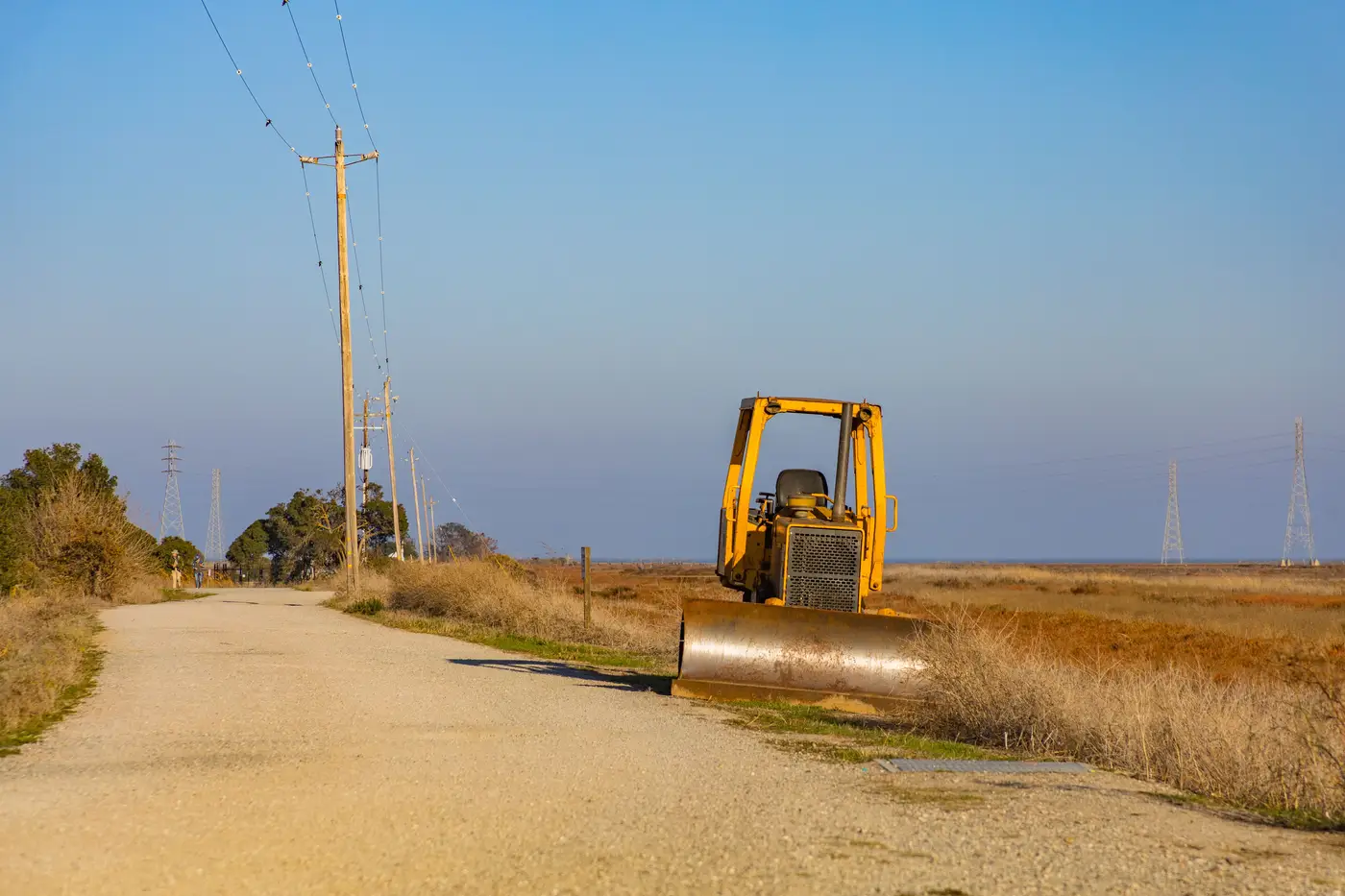
A BD analyst drives past a parcel that's been sitting on the watch list for eight months and sees pink flagging along the fence line. Is that a problem? Maybe not yet. Orange lath with station numbers and cut/fill elevations written on it is a different story entirely, and it means someone is a lot closer to steel in the ground than a strip of ribbon tied to a t-post.
The two kinds of stakes get lumped together in casual site reports, but they mark opposite ends of a project's life. Knowing which one you're looking at is the difference between "someone's sniffing around" and "this site is gone."
Survey stakes: evaluation, not commitment
Survey stakes show up early and often mean less than people assume. A boundary survey crew sets stakes or rebar pins with a cap stamped with the surveyor's license number, usually to confirm the parcel lines before anyone signs an option. Wetland delineation flags, usually pink or the pink-and-black striped kind, mark where a biologist walked a drainage or a seasonal pool. Geotech borings leave a short painted stake or a PVC stub where a rig pulled a core sample. Met tower guy-wire anchors get their own set of markers too, sometimes years before any turbine design is final.
None of that means the site is locked up. Developers survey a lot of ground they never build on. A parcel with fresh boundary flags could belong to a competitor three steps into due diligence, or it could be a landman who ran an option and then let it lapse six months later when the interconnection study came back ugly. Survey stakes tell you someone opened a file. They don't tell you the file is still open, and they definitely don't tell you financing closed.
Construction stakes: someone already cleared the queue
Construction staking is a different animal. It comes with grade stakes carrying cut and fill numbers, offset stakes set back from the centerline with station markings, silt fence and erosion-control stakes along the drainage, and often batter boards near where a substation or collector line will go. Fencing goes up. Vegetation gets cleared in strips that follow a road or collector route rather than a property line. A laydown yard appears.
Getting to that point means a competitor already has what you don't: a signed interconnection agreement, permits in hand, and almost certainly a financing package or at least a notice-to-proceed from an EPC. Nobody sets grading stakes on spec. If you see this on a site that's still on your candidate list, that site is done, and the only question worth asking is whether your BD team should have caught it three months earlier.
The gap is the useful part
The gap between the two stake types, and how fast it closes, is what actually matters, more than either one on its own. A site that goes from no activity to boundary flags to full grading stakes inside two quarters tells you a competitor is moving a lot faster than their public permitting timeline suggests. A site with survey stakes that's sat untouched for a year and a half is probably a dead lead someone forgot to pull from their own list, and worth a second look for your own pipeline.
Reading the stakes correctly isn't the hard part. Catching them in time is. Nobody has staff to drive every parcel on a forty-site watch list every month, so the check happens only when a deal is already moving and someone remembers to ask "has anyone been out there lately." By the time that question gets asked, the answer is sometimes construction stakes that have been up for ten weeks.
That's the gap a quarterly pass over everything on your watch list is built to close: a dated flag on fencing, clearing, or new construction on each site, so the question gets answered before the bid memo gets written instead of after.
If your team is still relying on someone's windshield survey to catch this, it might be worth seeing what a scheduled check across the whole candidate list would have told you last quarter.