14 October 2026
Test boring or full grading? Reading ground disturbance on a candidate site
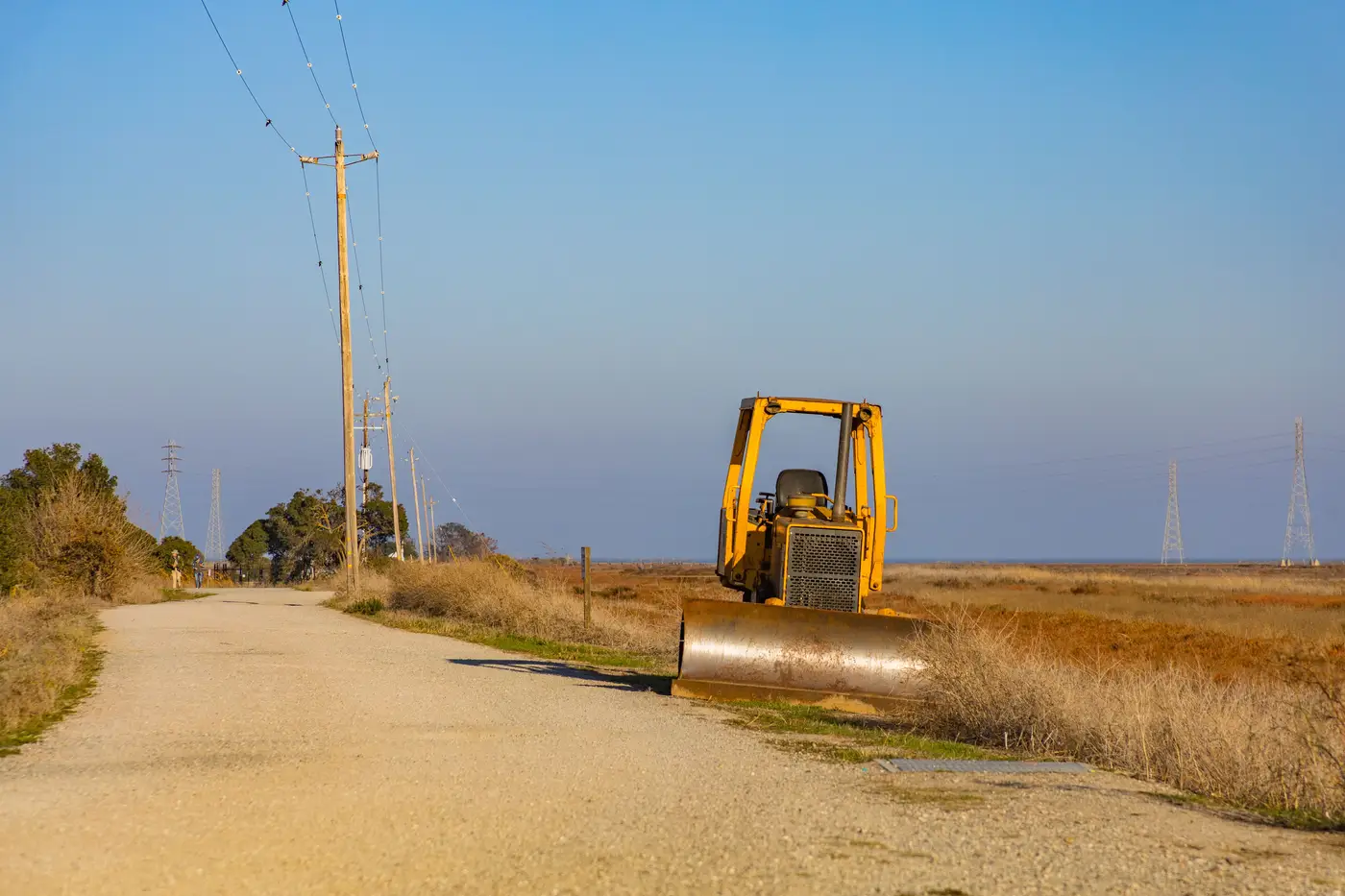
A BD analyst pulls up the latest pass on a site a competitor has had under option for eight months and sees fresh disturbance scattered across the parcel. The real question is how far along that work actually is: a few weeks into a drilling program, or months into mechanical grading. A geotech crew with a truck-mounted rig and a drill log is a very different signal than a grading contractor with a dozer and a haul road.
Get that call wrong and you either walk away from a site someone barely touched, or you spend diligence money chasing a parcel that's already three months from mechanical completion. Here's how to tell the two apart on a VHR pass.
What a test boring looks like from above
Geotechnical investigation is narrow and temporary. You're looking for:
- Small, discrete disturbances, often under 10 meters across, scattered in a loose grid or line across the parcel rather than concentrated in one corner.
- Thin access tracks cut just wide enough for a truck-mounted or trailer-mounted rig, not graded roadbed.
- Little to no vegetation clearing beyond the immediate boring location. Geotech crews don't need sightlines or crane access, so tree cover and field edges usually stay intact.
- No laydown yard, no perimeter fencing, no staged equipment.
Check the same parcel the following quarter and find the dots in the same place, maybe a few more of them, same scale. That's consistent with a geotech program working through its boring plan. Someone paid for a drill crew, which is a real step. It falls short of land control in the sense that matters for a competing bid, though. Geotech can happen under an option agreement that later falls through.
What full grading looks like from above
Grading reads completely differently, and it tends to read differently fast:
- Large contiguous cleared polygons, often tied to a layout grid if you know roughly where turbine strings or panel blocks are planned.
- Cut-and-fill benching visible as tonal banding on slopes, something a single boring never produces.
- Wide haul roads with turning radii sized for delivery trucks, connecting to the public road network rather than dead-ending at a drill pad.
- A staging or laydown area, usually a flat cleared rectangle near the site entrance, sometimes with fencing going in around it first.
- Footprint that expands noticeably between one quarterly pass and the next. A boring grid holds its shape; a grading job doesn't.
Full grading is the signal that tells a BD team someone has moved past diligence and into construction mobilization, which usually means financing closed, permits are in hand, and the parcel is functionally off the table for a competing proposal.
The gray zone, and why cadence matters
The hard cases are early civil work: a single wide access road cut before any grading starts, or a cleared pad that could be a met tower install or could be the first corner of a construction yard. One pass rarely settles it on its own. The next pass usually does. A met tower pad stays the same size quarter after quarter. A construction yard keeps growing.
That's the actual value of checking a watch list on a fixed cadence instead of once. Comparing passes shows whether disturbance is a static geotech footprint or an expanding grading operation, something no single image can tell you by itself. A quarterly VHR pass at sub-half-meter resolution is enough to see the shape of a disturbance and whether it changed since last time. It won't tell you who's on site or what permit they're working under, and it's a dated flag rather than a live feed, so don't expect to watch a dozer move in real time.
Most BD teams used to handle this the manual way: someone calls a local contact, or a field rep drives the perimeter road when they're in the area anyway, to eyeball whether a site looks touched. That works until your watch list runs past a dozen parcels across two or three states, at which point the check stops happening reliably. Renewable Pipeline Tracking runs that same check against a standing watch list every quarter and flags which sites changed since the last pass, so the question of boring versus grading gets asked on a schedule instead of whenever someone happens to drive by.
If your team is still making that call parcel by parcel from memory, it might be worth putting your watch list in front of it.